The European Summer School in Logic, Language and Information (ESSLLI) on vuodesta 1989 lähtien ollut yksi johtavista monitieteisistä kesäkouluista, joka yhdistää logiikan, kielitieteen, tietojenkäsittelytieteen ja tekoälyn.
ESSLLI kokoaa vuosittain noin 400 osallistujaa eri puolilta Eurooppaa sekä Pohjois- ja Latinalaisesta Amerikasta ja Aasiasta. Tapahtumasta on muodostunut logiikan, kielitieteen ja tietojenkäsittelytieteen nuorille tutkijoille ja opiskelijoille tärkeä kohtaamispaikka, jossa keskustellaan ajankohtaisesta tutkimuksesta ja jaetaan osaamista.
ESSLLI 2026
Date: 3.–14. elokuuta 2026
Location: Praha, Tšekki
ESSLLI 2026 tarjoaa:
Tekoälyn parissa työskenteleville opiskelijoille ja tutkijoille ESSLLI on erityisen hyödyllinen sen vahvan päättelyä, kieliteknologiaa, formaaleja menetelmiä, laskentaa ja kognitiota painottavan sisällön ansiosta.
Mukaan ehtii ilmoittautua edullisemmalla early bird -hinnalla 31.5. asti. Tämän jälkeen ilmoittautuminen jatkuu normaalihinnalla 18.7. asti.
Tutustu ESSLLI 2026 -kesäkouluun alla olevien linkkien kautta (englanniksi):
The European Summer School in Logic, Language and Information (ESSLLI) is one of the leading interdisciplinary summer schools connecting logic, linguistics, computer science, and AI since 1989.
ESSLLI attracts every year around 400 participants from all parts of Europe, as well as from North and Latin America, and Asia. The ESSLLI has become the main meeting place for young researchers and students in logic, linguistics and computer science to discuss current research and to share knowledge.
ESSLLI 2026
Date: August 3–14, 2026
Location: Prague, Czech Republic
ESSLLI 2026 offers:
For students and researchers working in Artificial Intelligence, ESSLLI is especially valuable given the strong focus on reasoning, language technologies, formal methods, computation, and cognition.
If you are considering attending, now is the time to register before the early bird deadline.
Room AU111, Yliopistokatu 2, Aurora-building
Joensuu Campus, University of Eastern Finland
The FIN-CLARIAH Summer meeting takes place in Joensuu on 11 and 12 June, 2026. This year’s program brings together thematic plenary sessions and dedicated time to share ongoing work across the consortium. Our focus is on the relationships between digital materials, from texts to multimodal content and their creators, and the networks and communities that emerge around them.
We have two invited speakers. Ruth Ahnert is Professor of Literary History & Digital Humanities at Queen Mary University, London. She works at the crossroads of literary studies and computational linguistics, with an interest in networks. Read more here.
Tuija Saresma is Professor of Cultural Studies at the University of Eastern Finland. Her work focuses on e.g. language tensions and hate speech on social media. Read more here.
The program also includes presentations of tools and services developed within the FIN-CLARIAH network, and an impact roadshow showcasing research outputs of the infrastructure.
Please register via this link by 29 May, 2026.
For any questions, please contact Mikko Laitinen and/or Paula Rautionaho (firstname.lastname at uef.fi).
Thursday 11 June, 2026:
16.00-16.10 Opening and welcome (Mikko Laitinen)
16.10-17.10 Prof. Ruth Ahnert (Queen Mary University): Letter networks and the problem of aliases
17.15-18.15 FIN-CLARIAH Board meeting
19-21 Get together (self-funded)
Friday 12 June, 2026:
9.00-11.00 Select infrastructure tool/services presentations
11.00-12.00 Prof. Tuija Saresma (UEF): Making sense of hate speech: Researching a complex phenomenon from lived experience to large datasets
12.00-13.00 Lunch (self-funded in Aura)
13.00-14.15 Research output harvest (short presentations of published research using the infrastructure: please contact the organizers if you’d like to present your work!)
14.15-14.30 Farewell coffee
Welcome to the Digital Language Sovereignty – Euskadi–Finland AI & Language workshop, which brings together researchers and experts from Finland and the Basque Country (Euskadi) to discuss current developments and future opportunities in artificial intelligence and language technologies.
The event is free of charge and will take place at the University of Helsinki, City Centre Campus, on 22 April 2026 from 9:00 to 16:00.
During the day, we will address topics including:
The workshop is aimed at researchers and doctoral students, language specialists, representatives of public administration, and professionals working with AI and language models.
Register via the event page: https://euskorpora.eus/en/evento/workshop-digital-language-sovereignty-euskadi-finland-ai-language-workshop/
Tervetuloa työpajaan Digital Language Sovereignty – Euskadi–Finland AI & Language, joka kokoaa yhteen tutkijoita ja asiantuntijoita Suomesta ja Baskimaasta (Euskadi) keskustelemaan tekoälyn ja kieliteknologian ajankohtaisista kehityssuunnista sekä tulevaisuuden mahdollisuuksista. Tilaisuus on maksuton ja se järjestetään Helsingin yliopiston keskustakampuksella 22.4.2026 klo 9.00-16.00.
Keskustelemme päivän aikana mm. seuraavista teemoista:
Tilaisuus on suunnattu tutkijoille ja jatko-opiskelijoille, kieliasiantuntijoille, julkisen hallinnon edustajille sekä tekoälyn ja kielimallien parissa työskenteleville asiantuntijoille.
Lue lisää täältä: https://www.kielipankki.fi/tapahtumat/digital-language-sovereignty-euskadi-finland-ai-language-workshop/
Ilmoittaudu mukaan tapahtumasivulla: https://euskorpora.eus/en/evento/workshop-digital-language-sovereignty-euskadi-finland-ai-language-workshop/
This Roadshow event at Aalto University showcases scientific terminology work supporting researchers with the new language recommendations now being implemented, and introduces latest related infrastructures and research. We also wish to raise awareness of the resources, services and collaboration networks offered via FIN-CLARIAH. During the event, you will learn about The Helsinki Term Bank for the Arts and Sciences and see how you can utilize and contribute to it. In invited talks we present Finnish ontology resources available that can be used to engineer consistent terminologies for different research purposes and applications, and local researchers present their research illustrating the relevance of concepts, terminologies and ontologies for both human sciences and engineering. More widely, we wish to foster discussion on concept-aware AI.
Registration:
This event is free but requires registration. Please register no later than 20.3.2026 to ensure refreshments or to follow the event remotely.
Register here!
12:45 Welcome coffee
13:00 FIN-CLARIAH Introduction with Eetu Mäkelä, Professor of Digital Humanities, University of Helsinki (pdf)
13:10 Finding, using and sharing research data via Kielipankki – the Language Bank of Finland with Mietta Lennes, RI Specialist, University of Helsinki (pdf)
13:20 Introduction to “Terminology work at Aalto University” with Minna Söderqvist, Head of Doctoral Education Services at Aalto University and Antti Susiluoto, Planning Officer, Doctoral education services, Aalto University (Moderator Harri Kettunen) (pdf)
13:30 “How Can I Contribute to the Reliability of Information? Collaborative Terminology Work at the Helsinki Term Bank for the Arts and Sciences” with Harri Kettunen & Nathaly Pinto Torres (pdf)
13:50 Q&A
14:15 DARIAH-FI Introduction with Inés Matres (pdf)
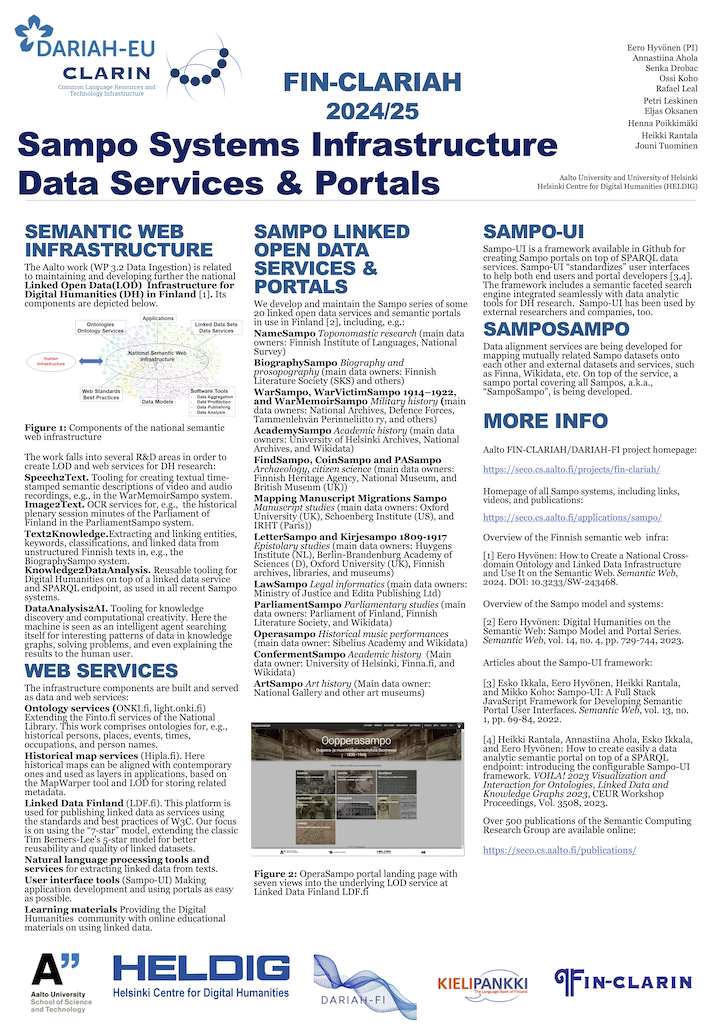
14:30 National Ontology and Linked Open Data Infrastructure and Data Services (Osma Suominen, National Library of Finland) (pdf)
14:45 Case Study: Analysis of genre evolution in Finnish fiction literature using BookSampo’s annotated genres (Annastiina Ahola, Aalto University) (pdf)
15:00 Case Study: Utilizing annotated keywords for prosopographical data analysis in Sampo systems (Petri Leskinen, University of Helsinki, Aalto University, and Geneva Graduate Institute) (pdf)
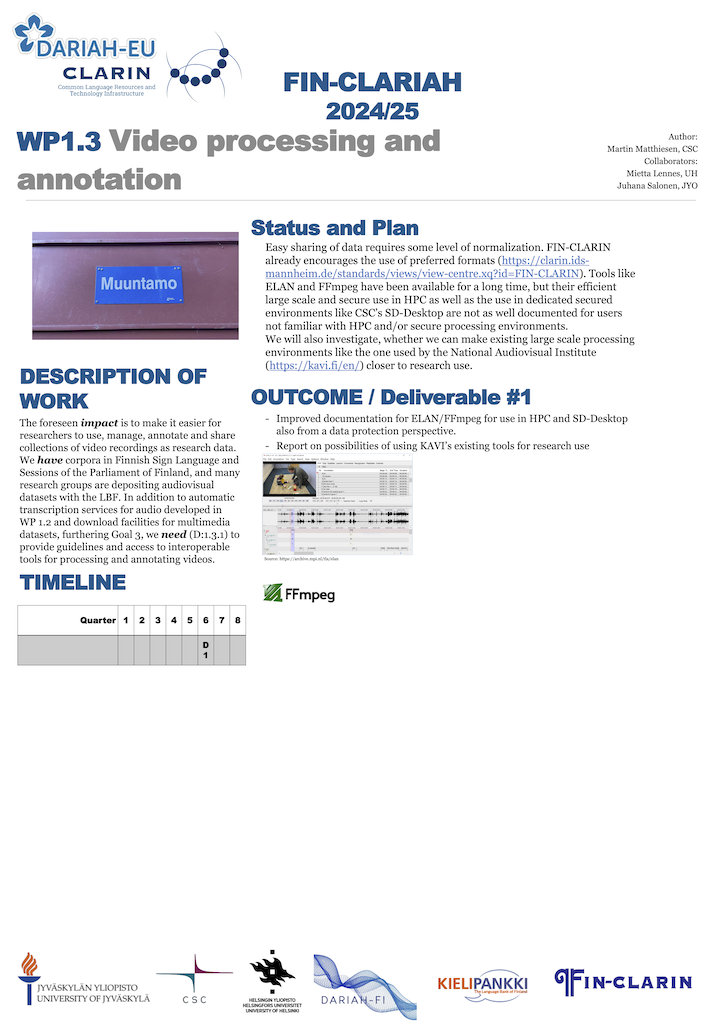
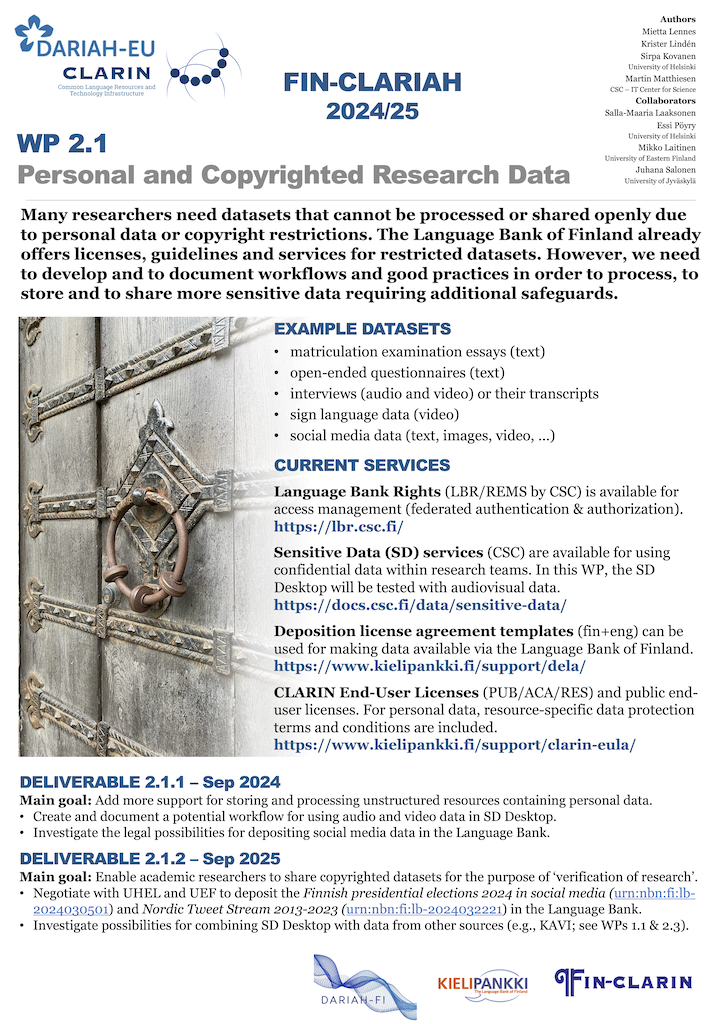
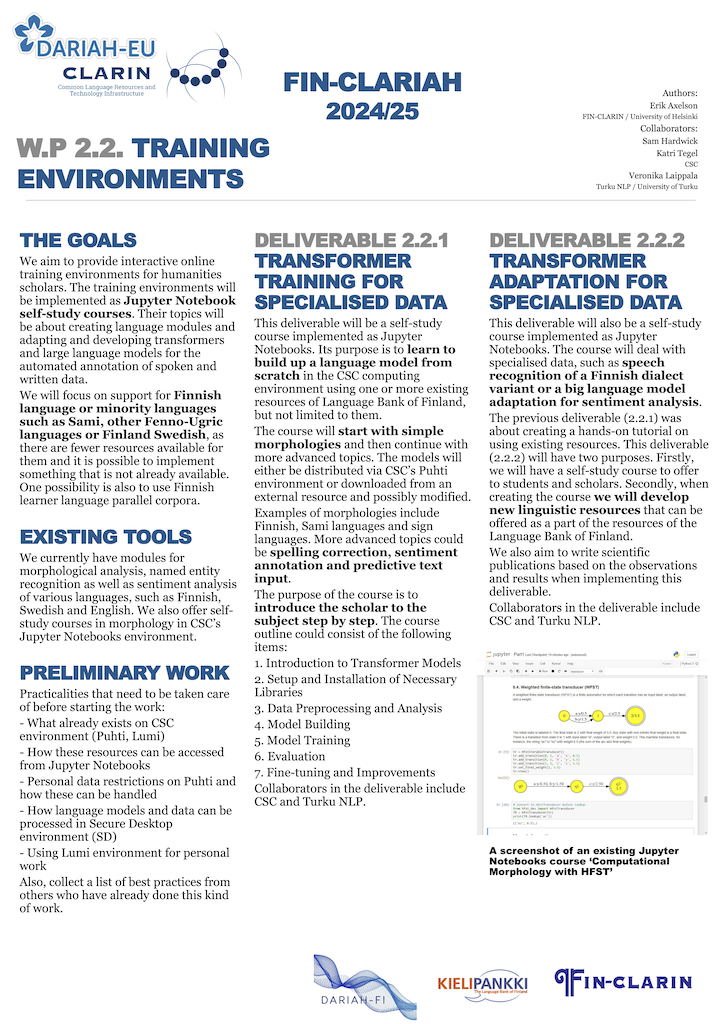
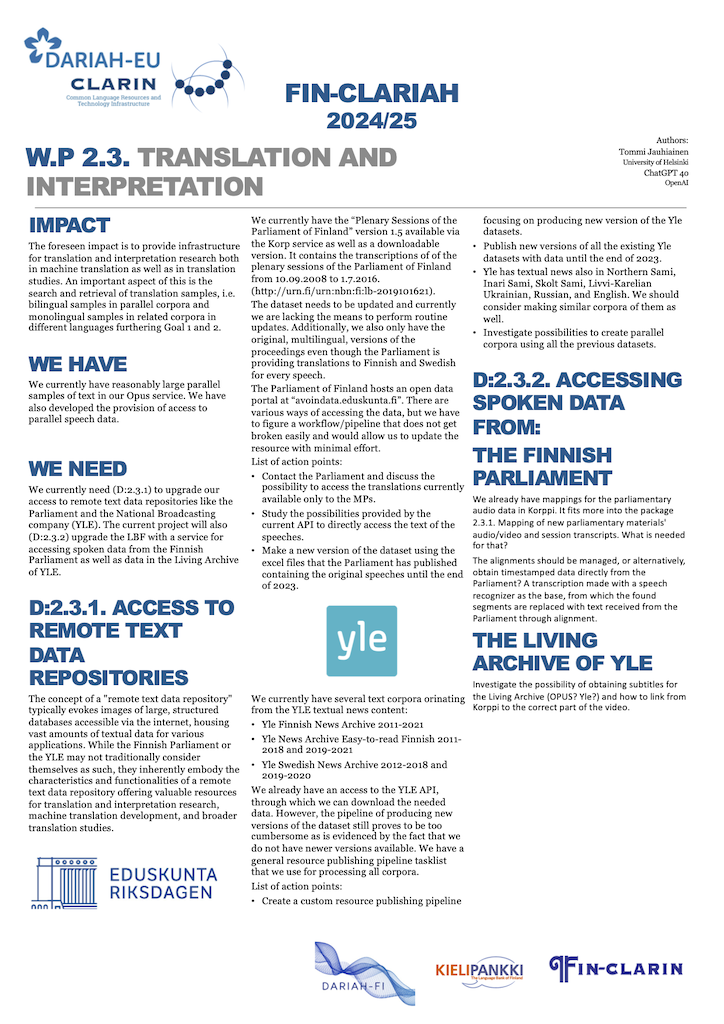
FIN-CLARIAH is the Finnish digital research infrastructure (RI) for Social Sciences and Humanities (SSH) connecting ten universities as well as memory organisations in collaboration with CSC to facilitate the use, refinement, preservation and sharing of research data for the SSH researchers in Finland. FIN-CLARIAH has two parts: FIN-CLARIN integrates language resources and tools for processing language data through Kielipankki – the Language Bank of Finland, and DARIAH-FI joins a network of researchers with methodological expertise from SSH to data science developing versatile analysis tools and supporting big data approaches.
The aim of this workshop is to gather ideas and discuss how our Research Infrastructure can better support the Research Community. We will hear presentations and updates from a few ongoing projects, as well as learn about new CSC services for researchers in the digital humanities. After the presentations, there will be time for discussion. The event is open to everyone, and we would especially like to invite FIN-CLARIAH collaborators and researchers who use Kielipankki and CSC resources to join this workshop.
The workshop can also be followed remotely via Zoom.
09:30 Coffee
10:00 – 11:30 Presentations & Discussion (stream)
11:30 The workshop ends
The FIN-CLARIAH Milestone Meeting (M4), titled Annotating Social Data, brings together researchers, infrastructure developers, and social scientists to explore current practices and future needs in annotating data sets in social sciences for further analysis. Hosted by the Centre for Social Data Science (CSDS), Faculty of Social Science, University of Helsinki, this milestone event delves into the methodological, technical, and ethical dimensions of annotating sensitive and small-scale textual data such as interviews, policy documents or social media posts, extending up to very large data sets typical in social media studies.
The day opens with a keynote by Salla-Maaria Laaksonen on collecting, annotating, and analyzing social media data, followed by insight talks from Krista Lagus on theory-based annotation using large language models (LLMs) and Hisayo Katsui. Afternoon sessions offer practical perspectives on secure environments for handling sensitive data, hands-on demonstrations with the CSC Secure Desktop environment, and discussions on ethical agreements and algorithmic transparency.
The event supports the broader goals of FIN-CLARIAH in developing national infrastructure for digital humanities and social sciences, and welcomes researchers and students from across disciplines interested in qualitative data, narrative analysis, secure practices for sensitive data, and the responsible use of AI tools in the annotation pipeline.
10:30 Welcome coffee
11:00 Welcome words
11:10 Keynote
12:00 Lunch
13:00 Insight talks
13:30 Afternoon parallel sessions
16:00 Plenary ends / Mingling
(Steering group meeting in parallel)
Organizers:
Department of Digital Humanities, University of Helsinki
LAREINA project
Location:
University of Helsinki, Main Building (Unioninkatu 34 entrance)
The development of language-centric AI during the past few years has been remarkable. It poses challenges but also creates opportunities for organizations both in the private and the public sector. Many of us are curious about how to harness the power of AI in our own business.
Our workshop on Accessing Data for Large Language-based Text and Speech Models will explore the potential benefit of copyrighted data vs. freely available data as well as recent results in training speech models using massive data sets.
This workshop is addressed to developers, integrators and users of language technologies and AI solutions in Finland. The workshop will be held in English and on-site only.
Registration has been closed.
Participation is free of charge, but registration is required. We have 50 seats available. Lunch and coffee breaks are included in the workshop.
If you have any questions, please contact the organizers via email: lareina-office AT helsinki.fi
|
08:30 – 09:00 |
Registration and Coffee |
|
09:00 – 10:30 |
Session 1: ”Copyright & LLMs”, room: Karolina Eskelin (U3032), 3rd floor 09:00–09:15Welcome and Introduction ”The AI Act and its impact on LLMs” (remote) ”The Legacy of Mímir: LLMs and Copyright at the National Library of Norway” (remote) Discussion |
|
10:30 – 11:30 |
Coffee break with Standing tables / Demo presentations, room: Christina (U2085), 2nd floor |
|
11:30 – 13:00 |
Session 2: ”Speech Technology in Society”, room: Karolina Eskelin (U3032), 3rd floor 11:30–12:00”Speech synthesis in Sámi and Karelian – Bringing minority voices into innovation projects” ”AI-assisted customer call transcription” ”Unlocking the Potential of Radio and Television Archives for Automatic Speech Recognition” |
|
13:00 – 14:00 |
Lunch Restaurant Flora, 2nd floor |
This workshop is organized by the LAREINA project and the University of Helsinki.
lareina-office [ATT] helsinki.fi
Materials (internal)
(Scroll down for registration, please register by June 2nd)
10:30 Welcome coffee
11:00 Welcome words (Raine Koskimaa, University of Jyväskylä / Krister Lindén, FIN-CLARIAH)
11:10 Keynote (online): Erkut Erdem (Hacettepe University): Computer Vision and Machine Learning – Incorporating Context into Visual Processing (to be confirmed) (Zoom link)
12:00 Lunch break. Location next to the venue (at own expense)
13:00 Insight talk: Tommi Jantunen & Juhana Salonen: “The multiple possibilities of signed language corpora” (Chair: Raine Koskimaa) (Zoom link)
13:30 Group discussions
15:00 Panel discussion. Short presentations of topics by group facilitators
16:00 Mingling
(16:00–17:00 Steering group meeting)
17:00 “Waiting for the last train” Possibility to have a drink/dinner near the railway station (at own expense)
CSC – IT Center for Science is inviting FIN-CLARIAH participants to visit the Data Center in Kajaani. Join the excursion, meet colleagues and see the culture-historically interesting surroundings and premises of LUMI and other supercomputers with your own eyes! We are also going to have FIN-CLARIAH project meetings on the train. Note that you can follow the presentations on Friday in Zoom, see details below.
Registration is closed.
Hotel suggestions
If you want to come by train, read these instructions on how to book it.
Unfortunately no online participation on Thursday.
| 8.19-14.35 | Train IC63 from Helsinki to Kajaani (optional)
Topic for meeting on the train: What could be a ”AI killer application / use case” for FIN-CLARIAH in the future? (Inspirational Youtube video: How AI helped to determine protein structures (22min, problem statement in the first minute) |
| 14:35 – 15:30 | Transfer to Tehdaskatu 15 Kajaani (30 min walk, weather permitting) |
| 15:30 – 17:30 |
Visit to the CSC Data Center, Tehdaskatu 15 Kajaani
|
| ~18:00 | Check-in hotel |
| 19:00 – | Dinner at Ravintola Terva (own cost) https://www.ravintolaterva.fi/a-la-carte/ |
Meeting at Ravintola Wanha Kerho Kauppakatu 40, 87100 Kajaani
| 9:00 – 10:00 | Presentation of ideas from the discussion in the train on Thursday | |
| 10:00 – 10:30 | Roihu – AI and data management (Sebastian von Alftan, Develoment manager, CSC) | |
| 10:30 – 10:40 | Coffee break | |
| 10:40 – 11:00 | Discussion in small groups: What methods can we use to estimate whether there is online data in the RI to answer a specific research question? | |
| 11:00 – 12:00 | LAIFS DaaS and discussion of needs from digital humanities (Heidi Laine, Senior specialist, CSC) | |
| 12:00 – 13:00 | Lunch | |
| 13:00 – 14:00 | HPC potential use cases in DH (Introduction by Eetu Mäkelä, UHEL; Johanna Lilja, NLF) + Discussion by all participants) |
End of common event
| 14.35-21.45 | Train IC70 from Kajaani to Helsinki (optional)
”How can we benefit from an HPC inference engine in the FIN-CLARIAH research infrastructure?” |
FIN-CLARIAH Roadshow in Vaasa: Some take-outs (blog posting, DARIAH-FI)
Watch a recording of the event!
|
12.15 – 12.20 |
Merja Koskela: Introduction and welcome |
|
12.20 – 12.30 |
Inés Matres: FIN-CLARIAH Overview of digital infrastructure for Social Sciences and Humanities (presentation slides) |
|
12.30 – 12.45 |
Mietta Lennes: How to find, use and deposit your research data and tools via Kielipankki – The Language Bank of Finland (presentation, PDF / presentation, PPTX) |
|
12.50 – 13.15 |
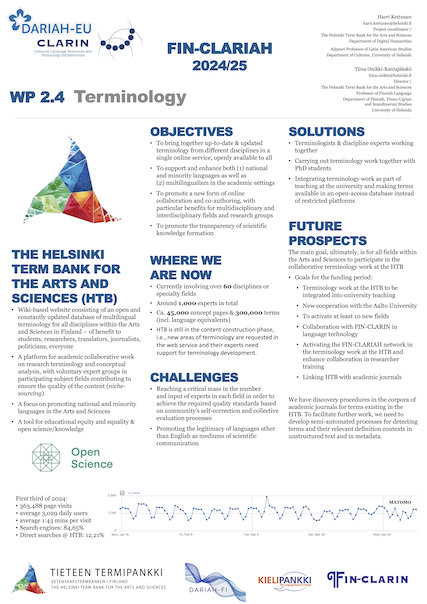
Harri Kettunen & Tiina Onikki-Rantajääskö: How Can I Contribute to the Reliability of Information? Collaborative Terminology Work at the Helsinki Term Bank for the Arts and Sciences |
|
13.15 – 13.30 |
Break |
|
13.30 – 14.00 |
Erik Henriksson: TurkuNLP tools to make sense of noisy web data (remote) Presentation slides |
|
14.00 – 14.30 |
Raine Koskimaa, Ida Toivanen & Jari Lindroos: “How to use” – Twitch collector and analysis tools |
|
14.30 – 15.00 |
Martta Ylilauri, Joni-Roy Piispanen & Rebekah Rousi: Natural impact – VR in NATUREACH / Luonnon hyvinvointivaikutukset – VR NATUREACH-hankkeessa |
|
15.00 |
Discussion |
Verkkokurssi Korpuslingvistiikka ja tilastolliset menetelmät on suunnattu kieliaineiden ja muiden aineiden opiskelijoille, jotka haluavat oppia korpusten käytön perusteet.
Kurssi on tarjolla sekä suomeksi että englanniksi ja se on ilmainen kaikille yliopisto-opiskelijoille Suomessa ja Suomen ulkopuolella. Avoimen yliopiston kautta kurssin voi suorittaa maksullisena. Kurssi alkoi maanantaina 13.1.2025, mutta osallistujamäärän salliessa kurssialueelle voi liittyä vielä 24.1. saakka.
Lue lisää ja ilmoittaudu mukaan!
Huom. Sama kurssi järjestetään uudelleen seuraavan kerran syksyn 1. periodissa, 1.9.2025 alkaen (seuraa kurssisivua).

The EU is in the process of creating an internal market for all types of data. The aim is to ensure that data can be shared from one stakeholder to another within the region, in accordance with the EU legislation. Data sharing requires interactive networks – data spaces – that can connect data providers and users, and offer a platform for them to communicate, make contracts and trade with each other.
All the upcoming European data spaces will be developed in line with the European Data Strategy. There are development plans for data spaces for approximately 15 different strategic fields. According to the vision, data spaces will allow for the commercialisation and more efficient re-use of data. This will benefit not only commercial stakeholders in the EU, but also EU citizens by providing them with better digital services, for example. In addition, researchers could gain access to new types of data and materials, which could boost basic research and increase opportunities for product development and innovation.
The European Language Data Space (shortened: LDS) is an ecosystem for the sharing and commercialisation of language data, such as text and speech data, and for the development of large language models and language-centric Artificial Intelligence. The Language Data Space is being developed and coordinated by the LDS Consortium, which was established in early 2023 with the support of the European Commission. The first phase of the LDS will last three years and during this period, the technical and legal framework for the operation of the common language data platform will be established in cooperation with the various stakeholders.
The work on the language data space will also be driven forward by ALT-EDIC, the language technology alliance of EU member states established in early 2024. In particular, ALT-EDIC aims to ensure the development of EU-based large language models.
The Language Data Space will be built partly on top of existing networks and language technology infrastructures. Sitra’s publication Snapshot of Finnish data spaces (2024) summarises well the current situation in Finland with regard to language technologies and the Language Data Space (in Finnish).
In spring 2024, the LDS Consortium launched a series of country-specific workshops to share information about the possibilities of the common Language Data Space, and to reach as many stakeholders in each member country as possible. The workshops are organised in collaboration with local institutions. In April 2024, Finland had the honour of being the first EU member state to host an LDS workshop. The event was organised locally by the University of Helsinki. More information on workshops in other EU countries and upcoming LDS events can be found on the Language Data Space website.
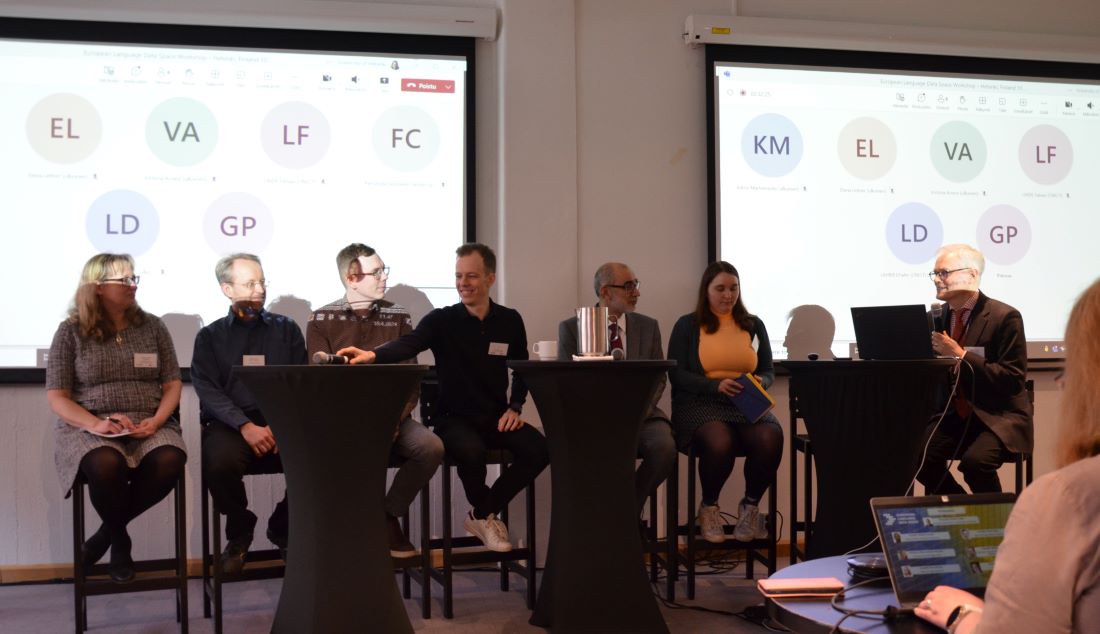
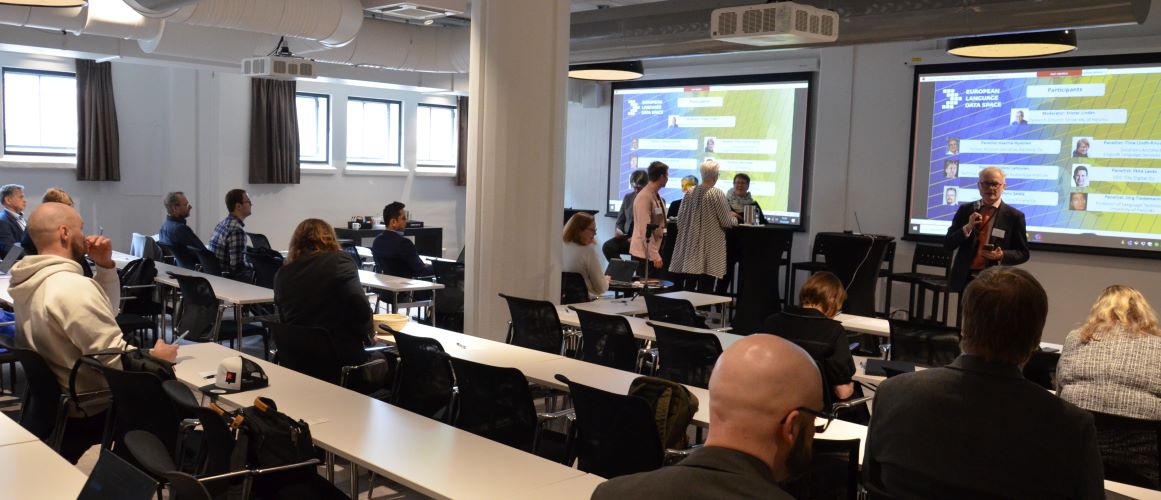
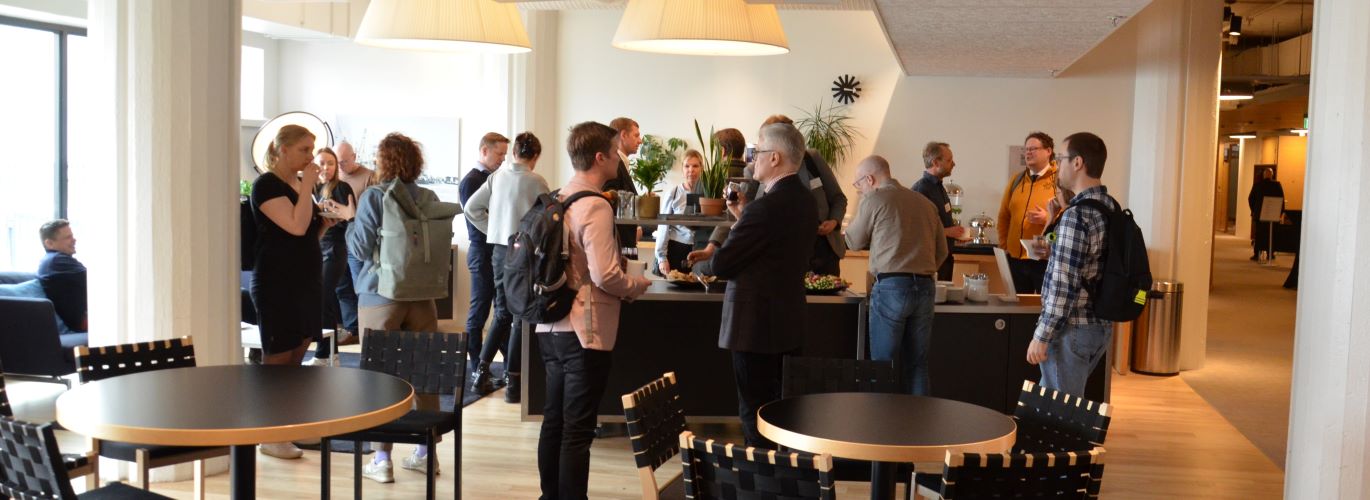
The Finnish LDS workshop provided an opportunity for organisations and companies in Finland to exchange ideas on the possibilities and challenges that a common platform and marketplace for language models and data could offer. As remote presenters, the workshop featured Philippe Gelin from the European Commission, and Georg Rehm from DFKI in Germany. In the panel discussions (see photos below), partners from the LAREINA project coordinated by the University of Helsinki shared their views on the importance of language data and on the challenges regarding the availability and technical quality of data or regarding copyright constraints. Without access to electronic data of sufficient quality and scope, it is difficult to develop language models for speakers of small and medium-sized languages.
After the LDS workshop, Finland initiated the membership process to join ALT-EDIC as an observer member. After summer 2024, the full membership of Finland in ALT-EDIC was confirmed for the next three years. The administrative representative of Finland in ALT-EDIC is the Ministry of Transport and Communications, with whom the University of Helsinki aims to maintain an active dialogue.
Language Data Space invites European stakeholders to join the LDS User Group. The group includes commercial stakeholders from different sectors as well as representatives from both public administrations and research. The news from the remote meeting of the LDS User Group in November 2024 can be found here. Joining the LDS User Group is done via a form that can be found on the LDS website. In particular, language data providers and utilisers, as well as language model developers, are warmly welcome to join the group.
At the end of 2024, the Language Data Space is entering the pilot phase, where the Language Bank of Finland is also actively involved. The aim is to test the pilot version of the LDS platform in Finland and to collect user feedback. The Language Bank of Finland is also planning to organise a workshop in spring 2025 on the Language Data Space, ALT-EDIC and copyright issues. We will inform about this upcoming event on our website and through the LAREINA project.
All photos in the article: Jyrki Niemi / University of Helsinki
EU luo parhaillaan kaikenlaiselle datalle sisämarkkinoita, joilla pyritään varmistamaan datan liikkuvuus alueen toimijoiden välillä EU:n lainsäädännön mukaisesti. Tähän tarkoitukseen tarvitaan vuorovaikutteisia verkkoja – data-avaruuksia – jotka voivat yhdistää datan tarjoajat ja käyttäjät ja tarjota heille alustan keskinäiseen viestintään, sopimusten laatimiseen ja kaupankäyntiin.
Kaikki vireillä olevat eurooppalaiset data-avaruudet kehitetään Euroopan datastrategian mukaisesti. Data-avaruuksia ollaan pystyttämässä jo noin 15 eri toimialalle. Tarkoituksena on, että niiden avulla dataa voitaisiin kaupallistaa ja tehostaa sen uudelleenkäyttöä. Tästä hyötyisivät EU-alueen kaupallisten toimijoiden ohella myös kansalaiset, kun esimerkiksi digitaaliset palvelut paranisivat. Lisäksi tutkijat voisivat saada pääsyn uudenlaisiin aineistoihin, mikä tukisi perustutkimusta ja parantaisi mahdollisuuksia tuotekehittelyyn ja innovaatioihin.
European Language Data Space (lyhenne: LDS) eli Eurooppalainen kielidata-avaruus on kielidatan, kuten teksti- ja puheaineistojen, jakamiseen ja kaupallistamiseen sekä suurten kielimallien ja kielikeskeisen tekoälyn kehittämiseen tarkoitettu ekosysteemi. Kielidata-avaruutta kehittää ja koordinoi LDS-konsortio, joka perustettiin Euroopan komission myötävaikutuksella alkuvuonna 2023. LDS:n ensimmäinen vaihe kestää kolme vuotta, joiden aikana on tarkoitus luoda yhteisen kielidata-alustan toiminnalle tekniset ja juridiset puitteet yhteistyössä eri sidosryhmien kanssa.
Kielidata-avaruuden edistämiseen osallistuu myös ALT-EDIC, alkuvuonna 2024 perustettu kieliteknologian allianssi, jonka jäseninä ovat EU-valtiot. ALT-EDICin tavoitteena on varmistaa etenkin EU-lähtöisten suurten kielimallien kehittäminen.
Kielidata-avaruutta rakennetaan osin jo olemassa olevien verkostojen ja kieliteknologisten infrastruktuurien päälle. Sitran julkaisu Suomalaisten data-avaruuksien tilannekuva (2024) kiteyttää hyvin Suomen tilanteen kieliteknologioiden ja kielidata-avaruuden osalta.
LDS-konsortio käynnisti keväällä 2024 maakohtaisten työpajojen sarjan, jotta tieto yhteisen kielidata-avaruuden mahdollisuuksista kantautuisi eteenpäin ja tavoittaisi kunkin jäsenmaan sidosryhmiä mahdollisimman laajalti. Työpajat järjestetään yhteistyössä paikallisten toimijoiden kanssa. Huhtikuussa 2024 Suomella oli kunnia olla ensimmäinen EU:n jäsenvaltio, jossa toteutettiin LDS-työpaja. Paikallisena järjestäjänä toimi Helsingin yliopisto. Muissa EU-maissa järjestettyihin työpajoihin sekä tuleviin LDS-tapahtumiin voi tutustua Language Data Spacen verkkosivuilla.
LDS-työpaja tarjosi Suomessa toimiville organisaatioille ja yrityksille tilaisuuden vaihtaa ajatuksia siitä, millaisia mahdollisuuksia ja haasteita yhteinen kielimallien ja -datan jakelualusta ja kauppapaikka voisi tarjota. Työpajassa vierailivat etäpuhujina Philippe Gelin Euroopan komissiosta sekä Georg Rehm DFKI:sta, Saksasta. Paneelikeskusteluihin (ks. kuvat alla) osallistui Helsingin yliopiston koordinoiman LAREINA-hankkeen yhteistyökumppaneita, joilla on kokemusta kielidatan merkityksestä sekä tietoa haasteista, jotka liittyvät datan saatavuuteen, tekniseen laatuun tai tekijänoikeuksien tuomiin rajoitteisiin. Jos riittävän laadukkaisiin ja laajoihin sähköisiin aineistoihin ei ole pääsyä, on vaikea kehittää omia kielimalleja pienten ja keskisuurten kielten puhujille.
LDS-työpajan jälkimainingeissa Suomi käynnisti jäsenyysprosessin ja liittyi ALT-EDICiin tarkkailijajäseneksi. Kesän 2024 jälkeen vahvistettiin myös Suomen täysjäsenyys seuraaviksi kolmeksi vuodeksi. Hallinnollisesti Suomea edustava taho ALT-EDIC-asioissa on Liikenne- ja viestintäministeriö, jonka kanssa Helsingin yliopisto pyrkii pitämään aktiivisesti yhteyttä.
Language Data Space kutsuu eurooppalaisia toimijoita mukaan LDS-käyttäjäryhmään. Mukana ryhmässä on eri alojen kaupallisia toimijoita ja julkishallinnon sekä tutkimuksen edustajia. LDS-käyttäjäryhmän marraskuussa 2024 järjestetyn etätapaamisen kuulumisia voi lukea verkkouutisesta. LDS:n sivuilla on myös käyttäjäryhmän liittymiskaavake. Ryhmään ovat tervetulleita erityisesti kielidatan tarjoajat ja hyödyntäjät sekä kielimallien kehittäjät.
Vuoden 2024 lopulla Language Data Space on siirtymässä pilotointivaiheeseen, jossa myös Kielipankki on aktiivisesti mukana. Tavoitteena on testata Suomessa LDS-alustan pilottiversiota sekä kerätä siitä käyttäjäpalautetta. Kielipankki suunnittelee myös järjestävänsä keväällä 2025 työpajan, jonka aiheina ovat LDS:n ja ALT-EDICin lisäksi tekijänoikeusasiat. Tiedotamme tapahtumasta myöhemmin verkkosivuillamme sekä LAREINA-hankkeen kautta.
Artikkelin kuvat: Jyrki Niemi / Helsingin yliopisto
Organizers:
Department of Digital Humanities, University of Helsinki
LAREINA project
Kites ry
Location:
Clarion Hotel Helsinki, Tyynenmerenkatu 2, Helsinki
The development of language-centric AI during the past few years has been remarkable. It poses challenges but also creates opportunities for organizations both in the private and the public sector. Many of us are curious about how to harness the power of AI in our own business.
Our workshop on Large Language Models and Speech-Centric AI will showcase various use cases and applications both in the public and private sector. Our objective is to introduce the current state of language-centric AI in Finland, and share information about the future of access to language data and modules. The demo presentations and industry talks will illustrate the potential use of language-centric AI.
This workshop is addressed to developers, integrators and users of language technologies and AI solutions in Finland. The workshop will be held in English and on-site only.
Participation is free of charge, but registration is required. We have 50 seats available. Registration has now ended and the event is fully booked.
|
08:30 – 09:00 |
Registration and Coffee |
|
09:00 – 10:30 |
LLMs and Speech-Interfaces in Private and Public Sector |
|
10:30 – 11:30 |
Demo Presentations and Coffee |
|
11:30 – 13:00 |
AI and Speech-Interfaces |
|
13:00 – 14:00 |
Lunch |
lareina-office [ATT] helsinki.fi
Last updated: October 8, 2024
To view or to download the PDF version, click on the image.

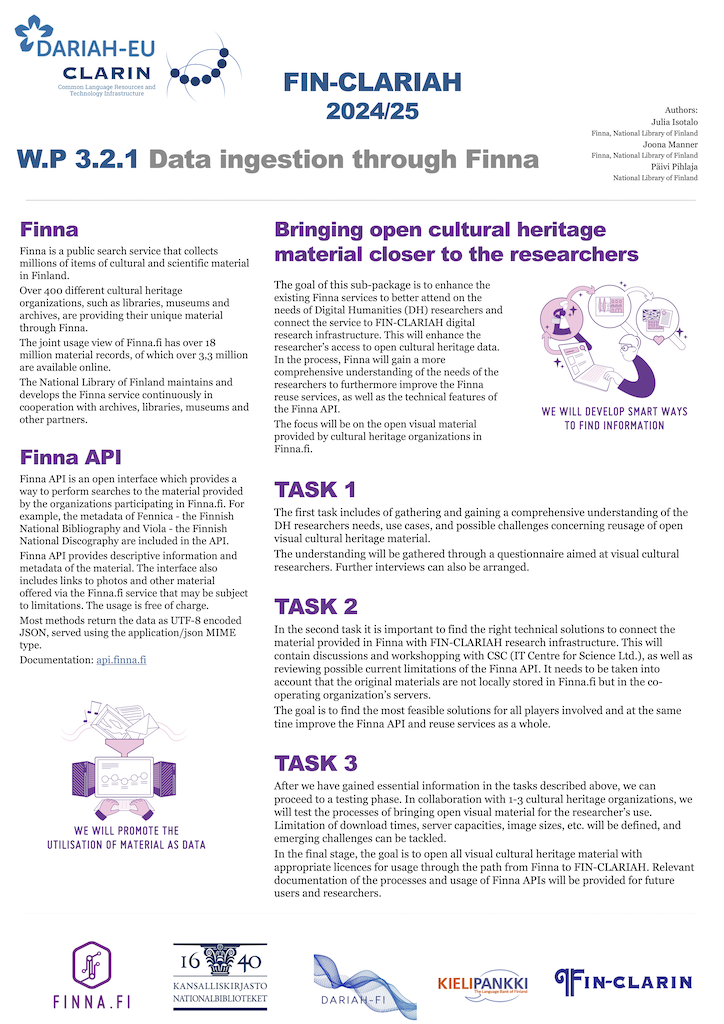
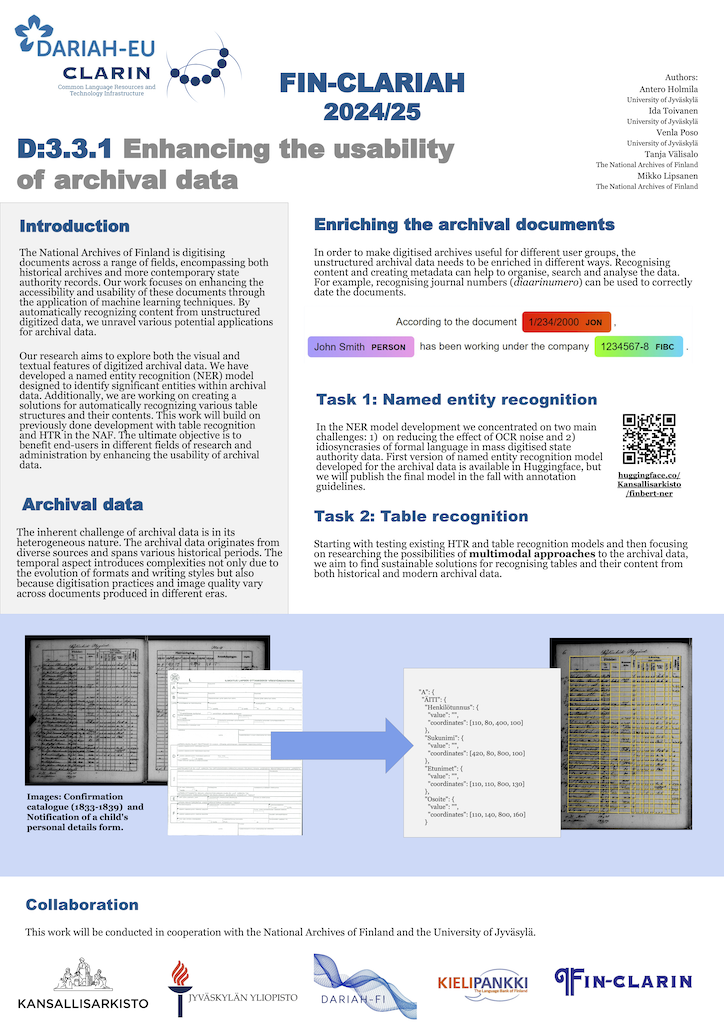
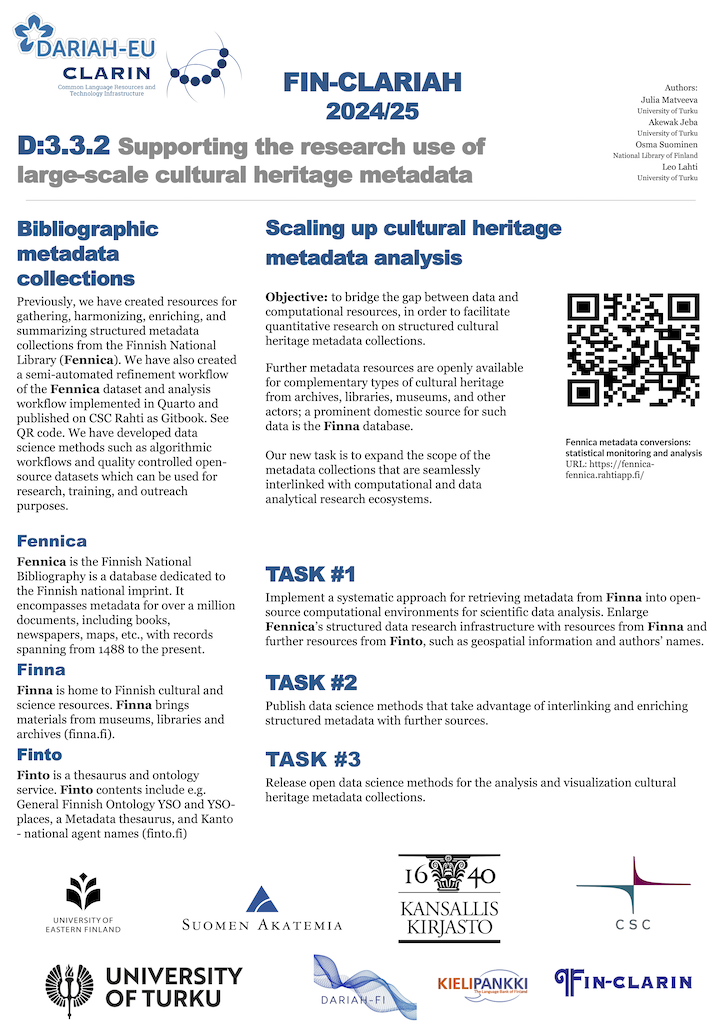
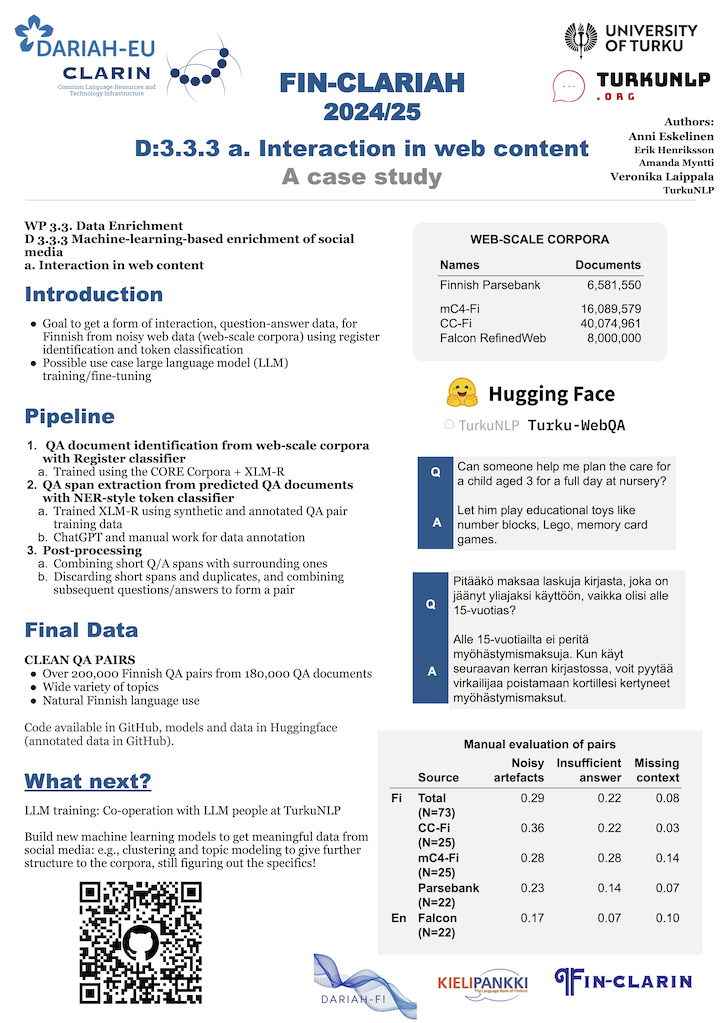
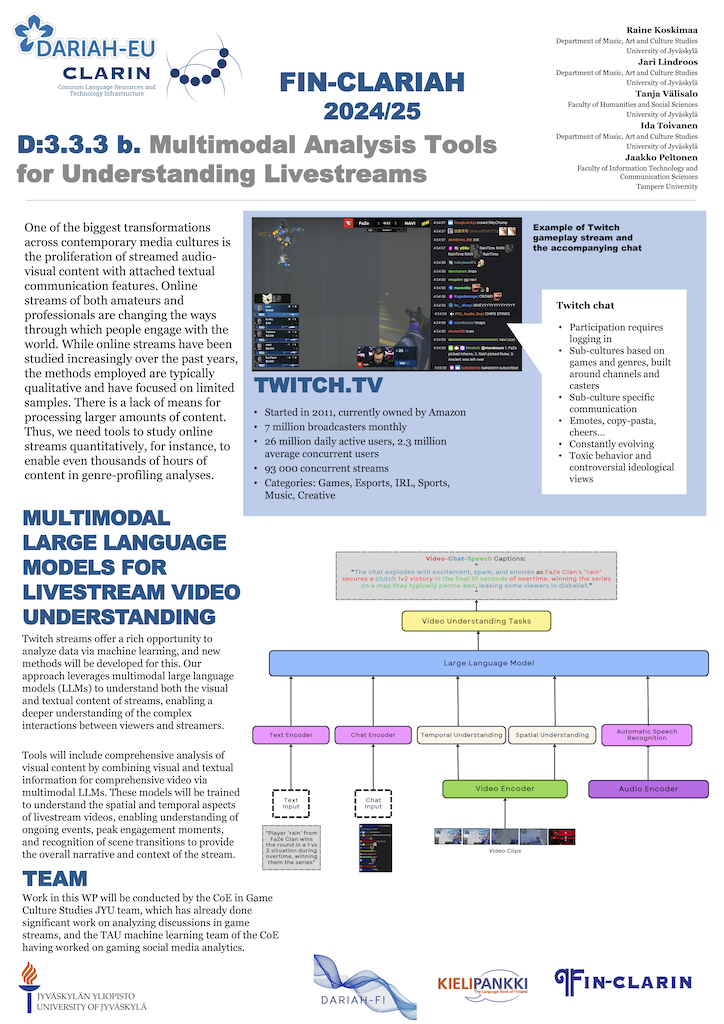
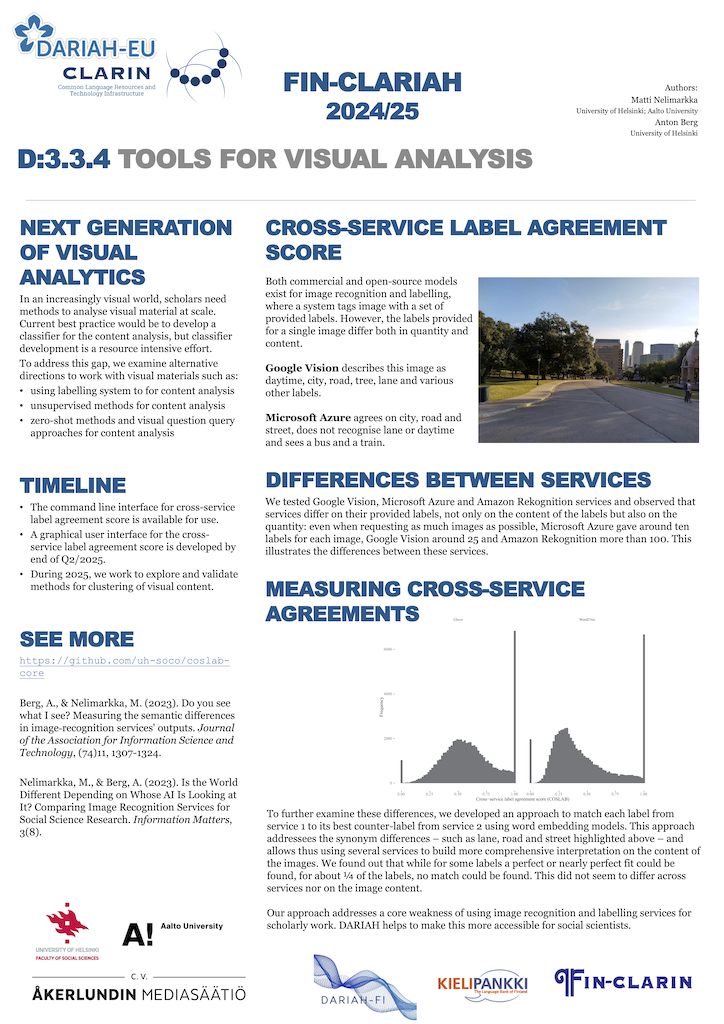
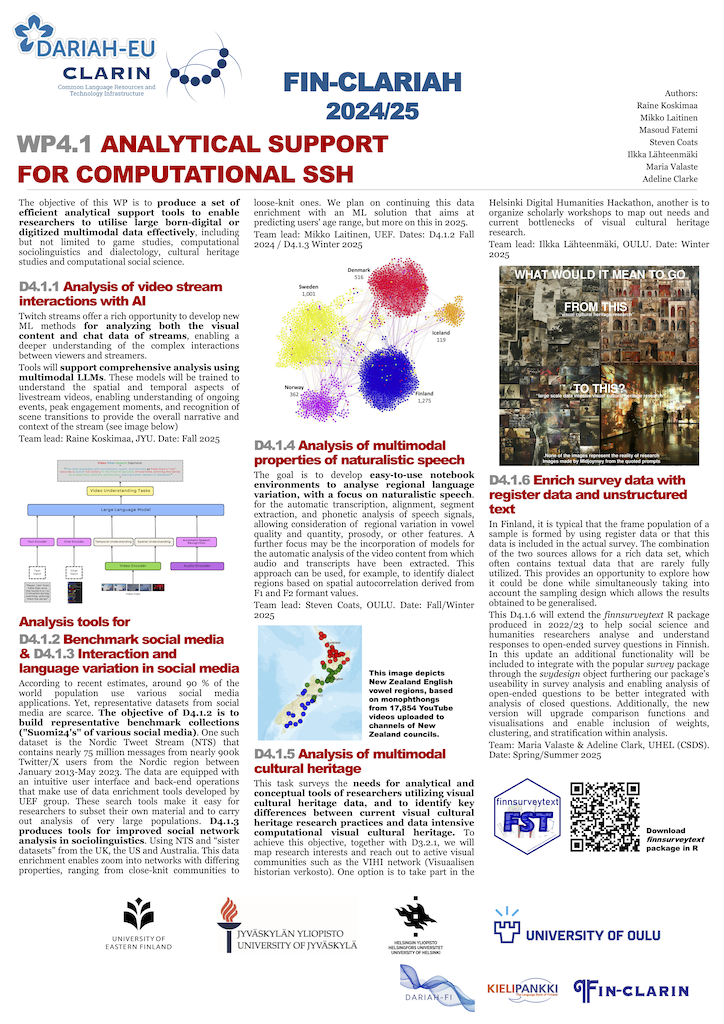
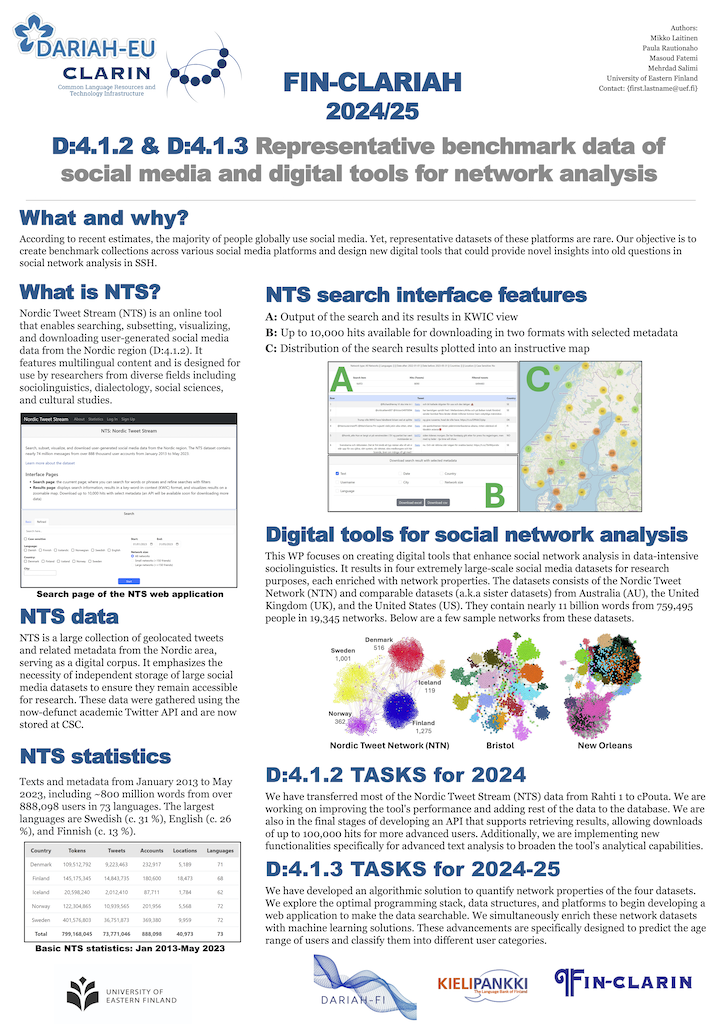
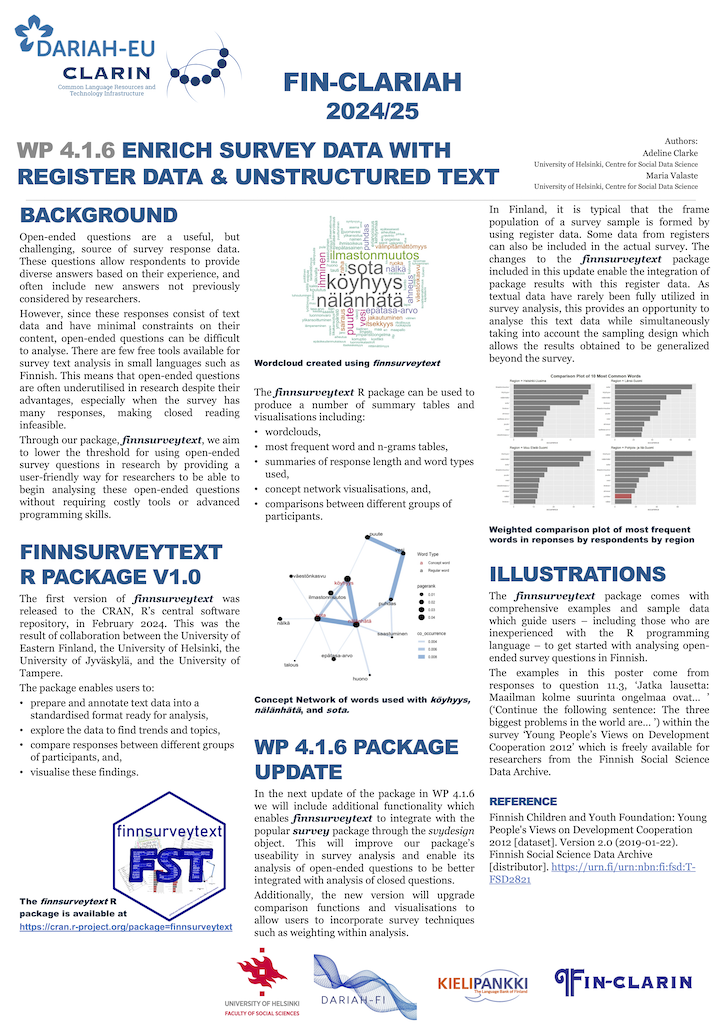
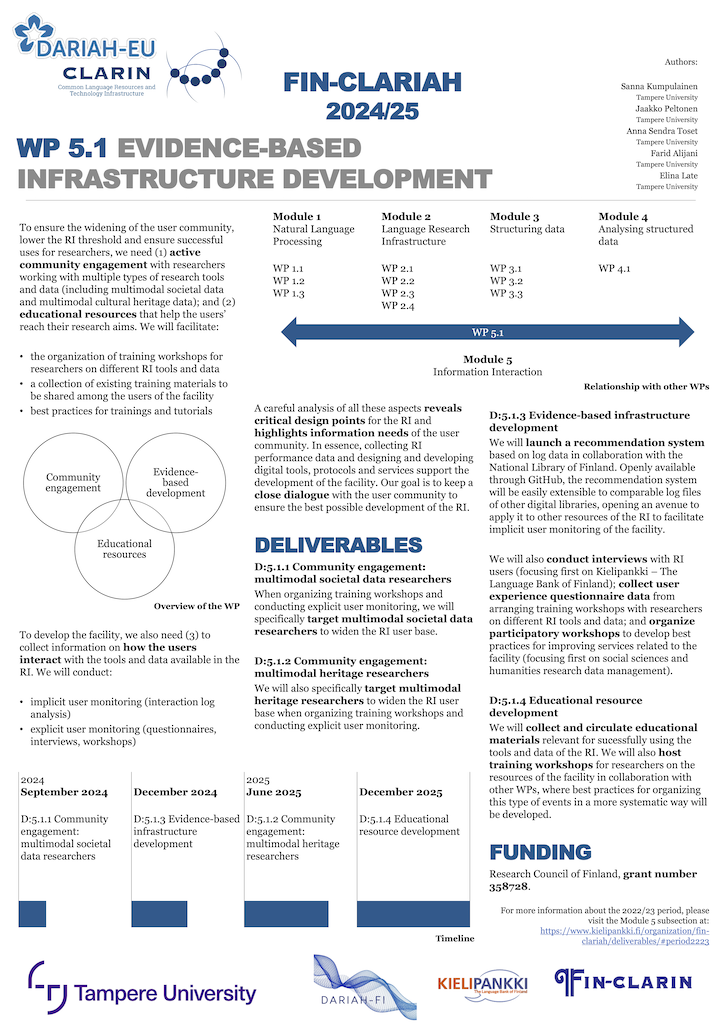
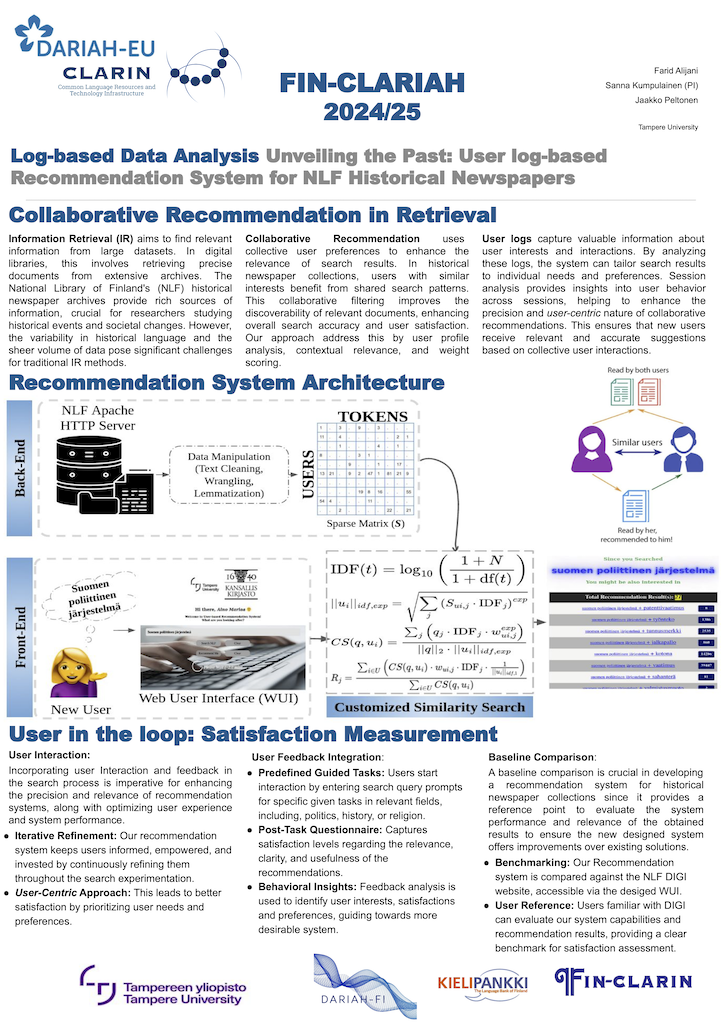
The goal of the workshop is to let the whole infrastructure reflect on how SSH research will be affected by AI and how we as an infrastructure should prepare for this. In addition, we need to collect information on what preparations are already taking place in the different locations of the infrastructure.
The goal of the workshop is to let the whole infrastructure reflect on how SSH research will be affected by AI and how we as an infrastructure should prepare for this. In addition, we need to collect information on what preparations are already taking place in the different locations of the infrastructure.
11.00-12.00 Keynote: Modern generative image modelling, Jaakko Lehtinen (Aalto University)
12.00-13.00 Lunch
13.00- Group discussions. Task: Brainstorm and develop an action plan for how to integrate transformer technology in the research infrastructure development (Tentative questions: AI for diverse data types? What is happening across locations? Making AI accessible and usable? Implications for SSH research, development, education?)
14.10-14.30 Coffee
14.30-15.00 Summaries from the groups
15.00 Poster session & Refreshments
16.00 Closing
Järjestäjät:
European Language Data Space
Digitaalisten ihmistieteiden osasto, Helsingin yliopisto
Eurooppalainen kielidata-avaruus (European Language Data Space, LDS) ja Helsingin yliopisto kokoavat yhteen suomalaisen teollisuuden, julkishallinnon ja tutkimuksen asiantuntijoita keskustelemaan kielidatan merkityksestä kieliteknologioiden ja tekoälypohjaisten työkalujen kehittämiselle Suomessa. Tilaisuus järjestetään 10.04.2024 Clarion Hotel Helsingissä.
Vuoden 2023 alusta lähtien Euroopan komissio on ohjannut ja tukenut uutta tapaa jakaa kielidataa Eurooppalaisen kielidata-avaruuden (LDS) kautta. Tämä uusi tapa ulottuu kielidataa laajemmalle, ja se kattaa monia aloja ja toimintaympäristöjä niiden niiden omien data-avaruuksiensa kautta. Yhteiseurooppalaisten data-avaruuksien (Common European Data Spaces) perustamisen myötä tiedotus ja välitys datan eri tiedonkuvaus- ja saatavuusmuotojen välillä on toteutumassa kaikissa Euroopan maissa.
Tätä taustaa vasten Eurooppalaisen kielidata-avaruuden tavoitteena on rakentaa luotettavat ja tehokkaat datamarkkinat kielivarojen jakamiseen julkisella ja yksityisellä sektorilla EU:n datastrategian mukaisesti.
Eurooppalainen kielidata-avaruus (LDS) järjestää sarjan maakohtaisia työpajoja, joiden tarkoituksena on auttaa paikallisia yrityksiä, tutkimusryhmiä ja julkishallintoja ottamaan uuden kielidatanvaihtoavaruuden käyttöönsä ja liittymään relevantteihin paikallisiin ja eurooppalaisiin verkostoihin. Samalla ne voivat hyödyntää jo olemassa olevia luotettavia infrastruktuureja. Eurooppalaisena kielidatan jakamisalustana LDS voi auttaa paikallisia toimijoita kaupallistamaan kielidataansa monikielisessä Euroopassa, jossa kieliteknologioiden ja tekoälypohjaisten sovellusten merkitys jatkuvasti kasvaa.
Suomen työpajassa käsitellään kotimaisen yksityisen ja julkisen sektorin sidosryhmien tarpeita kielidatan tarjoajina, integroijina ja/tai kuluttajina. Tapahtumassa jaetaan näiden tahojen kokemuksia ja vaatimuksia sekä selvitetään, kuinka voitaisiin päästä toivottuun teknologiseen kasvuun ja parantaa kilpailukykyä sekä kansallisella että Euroopan tasolla. Työpajassa keskustellaan siitä, kuinka LDS voi auttaa suomalaisia toimijoita ja tukea niiden pyrkimyksiä tuottaa, kaupallistaa tai hankkia kielidataa kieliteknologioiden ja tekoälypohjaisten työkalujen käyttövoimaksi Suomessa.
Työpaja on suunnattu datan haltijoille ja tarjoajille, kieliteknologioiden kehittäjille ja integraattoreille, pk-yrityksille sekä julkisen hallinnon edustajille, viranomaisille ja yhteistyökumppaneille. Työpaja on englanninkielinen.
Osallistuminen on maksutonta, mutta tilaisuuteen on ilmoittauduttava etukäteen. Ilmoittautuminen on päättynyt 03.04.2024. Ota yhteys järjestäjiin ja tarkista, onko tilaisuuteen vielä paikkoja jäljellä: lareina-office [ATT] helsinki.fi
|
09:00 – 09:45 |
Ilmoittautuminen |
|
09:55 – 10:05 |
Welcome and introduction |
|
10:05 – 10:35 |
Welcome by the European Commission: The Digital Europe Programme and the Common European Language Data Space |
|
10:35 – 11:05 |
The importance of language data for the development of LT solutions future steps |
|
11:05 – 11:30 |
Kahvitauko |
|
11:30 – 11:40 |
Welcome by the Ministry of Finance |
|
11:40 – 12:30 |
Language Data and Language Technologies in Finland and for Finnish |
|
12:30 – 13:00 |
European Language Data Space: developing a market for language data and services and benefitting from a joint European effort |
|
13:00 – 13:50 |
Lounas |
|
13:50 – 14:50 |
Language data production, management, and market development: overcoming obstacles – Panel session |
|
14:50 – 15:05 |
Conclusions |
| 15:05 – 15:15 |
Kahvitauko ja verkostoituminen |
| 15:15 – 16:15 |
Kahvitauko ja verkostoituminen jatkuvat Sitran järjestämässä Nordic Data Festival 2024 -tapahtumassa (rinnakkaistapahtumana Clarion Hotel Helsingissä) |
Krister Lindén and Wilhelmina Dyster
Helsingin yliopisto
lareina-office [ATT] helsinki.fi
Viimeksi päivitetty: 05.04.2024